
Now Reading: The Runway Revolution: The New Momentum of African Fashion
-
01
The Runway Revolution: The New Momentum of African Fashion



Africa is now establishing itself as a global creative hub, with 32 countries hosting fashion weeks that are energizing the market. However, an economic challenge remains: while the continent exports $15.5 billion USD in textile products, it imports $23.1 billion USD.
African fashion is no longer just a matter of tradition and culture; it has become a strategic economic driver. According to a recent UNESCO report, annual exports of textiles, clothing, and footwear from the continent amount to $15.5 billion USD to the rest of the world. Yet, paradoxically, the continent imports $23.1 billion USD worth of finished products every year.
At the heart of this transformative dynamic are fashion events. With 32 African countries now organizing regular Fashion Weeks, the continent is establishing itself as a new creative and commercial frontier.
A Continent in Creative Ferment
The numbers speak for themselves: more than half of African nations now have a dedicated platform to promote fashion. These events, varying in size and scale, are not merely social runway shows; they are catalysts for an ecosystem in transition.
Key International Hubs
From Lagos Fashion Week in Nigeria to South Africa Fashion Week in Johannesburg, and from Glitz Africa Fashion Week in Ghana to Dakar Fashion Week in Senegal, each region is developing its own identity. These events serve to:
Attract international buyers: Global fashion capitals like Paris, Milan, and New York are increasingly looking to these runways to spot tomorrow’s trends.
Professionalize the sector: By providing media visibility to local designers.
Unite talent: Models, photographers, makeup artists, and stylists find a unique platform for expression.
The Trade Paradox: Between Export and Import
The UNESCO report highlights a major structural challenge. While Africa exports $15.5 billion, it remains heavily dependent on imports ($23.1 billion). This imbalance is explained by several factors that fashion events are attempting to address.
The Challenge of Local Processing
Many raw materials (cotton, leather, silk) leave the continent in their raw state to be processed elsewhere, only to return as expensive finished products.
“Fashion in Africa is a giant that is only beginning to realize its own production strength,” industry experts often note.
Fashion Weeks play a crucial role here by encouraging the “Made in Africa” movement. By showcasing local textiles—such as Faso Dan Fani, Bogolan, or Kente—in modern silhouettes, these events encourage local consumers to prioritize indigenous creations over mass-produced imports.
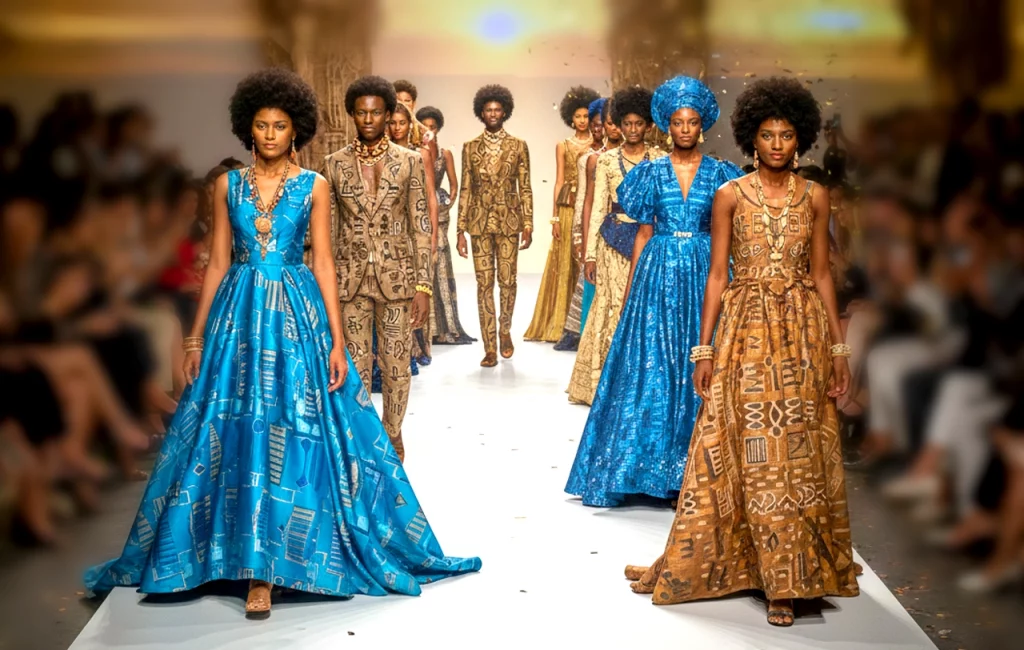
Sustainability and Innovation
Unlike Western “Fast Fashion,” the African fashion presented during these 32 Fashion Weeks often relies on more sustainable models.
Craftsmanship and Technology
- Eco-responsibility: Many African designers use natural dyeing methods and hand-weaving techniques that have a minimal carbon footprint.
- Digitalization: With the rise of e-commerce, fashion events serve as digital showrooms. Social media allows a runway show in Nairobi to be transformed into an immediate sales opportunity in Tokyo or London.
Africa is the future of fashion. We have the materials, we have the talent; all we are missing is the industry to process our wealth at home.
Pathé’O
Fashion as a Soft Power Lever
Beyond the numbers, the multiplication of fashion events strengthens the continent’s cultural influence. UNESCO notes that this excitement puts the market “in ferment.” This vitality changes the narrative about Africa: it is no longer just about natural resources, but about intellectual property and creative genius.
Impact on Employment
The textile sector is the second-largest employer in Africa after agriculture in certain countries. By structuring the market through professional events, the continent can hope to bridge its trade balance gap. Every Fashion Week generates direct and indirect jobs, from small-scale artisanal tailors to international logistics providers.
Conclusion: Toward Sartorial Sovereignty
The potential is immense. For exports to catch up with and eventually exceed imports, Africa must continue to structure its fashion events not as isolated spectacles, but as genuine investment platforms.
Moving from 32 organizing countries to stronger regional integration could create robust value chains. The goal is clear: transform the $23.1 billion in imports into a dynamic local production that will clothe not only the continent but the entire world.

Related Posts


Stay Informed With the Latest & Most Important News
Previous Post
Next Post







Advertisement
