
Now Reading: Eloquence at Your Fingertips: The Ultimate Guide to Hand and Nail Care for Black Women
-
01
Eloquence at Your Fingertips: The Ultimate Guide to Hand and Nail Care for Black Women

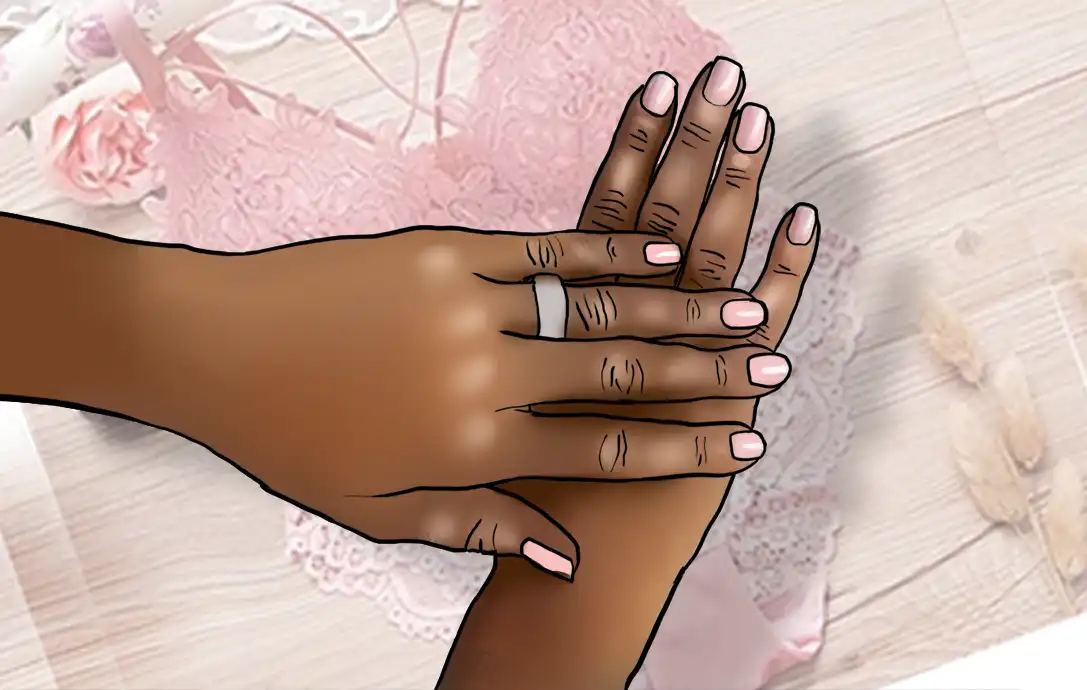
Eloquence at Your Fingertips: The Ultimate Guide to Hand and Nail Care for Black Women

Master hand and nail care for Black women. Discover hydration rituals for melanin-rich skin and professional nail aesthetics tailored to your career.
It is often said that the hands are the mirror of the soul, but for the Black woman, they are, above all, the narrative of an identity, a heritage, and an ambition. Subjected to external aggressions, hard water, and daily manipulation, melanated hands demand attention that goes far beyond mere vanity. Between the struggle against dehydration and the self-affirmation found in “Nail Art,” hand care has become a true ritual of empowerment.
The Biology of Melanin: Why Our Hands Are Unique
To understand how to care for the hands of Black and mixed-race skin, one must first understand their structure. Black skin is naturally rich in melanin, providing protection against UV rays, but it often possesses a more fragile lipid barrier in temperate or cold climates.
The most common phenomenon is “ashiness” (dull, grayish skin). This is nothing more than an accumulation of dead skin cells which, on dark skin, reflect light in a grayish tint instead of letting the natural glow shine through.
The Challenge of Darker Knuckles
Many Black women notice hyperpigmentation around the joints (phalanges). This contrast is entirely natural, yet it can be accentuated by friction or the use of unsuitable products. Care should not seek to “bleach” or “lighten,” but rather to unify through deep hydration and gentle exfoliation.
The Care Ritual: Beyond Basic Moisturizing
Proper maintenance doesn’t stop at a quick application of lotion after washing your hands. A true protocol is necessary to maintain radiance.
1. Gentle Cleansing
Harsh soaps and frequent use of hand sanitizers are the sworn enemies of your hands. Opt for cleansing oils or superfatted (surgras) soaps. An age-old tip that still works? Wash with lukewarm water—never boiling—to avoid stripping the skin’s natural oils.
2. Exfoliation: The Key to Radiance
Once a week, scrubbing is essential. A mixture of brown sugar, honey, and Baobab oil allows you to remove dead skin without being abrasive. Baobab oil is particularly recommended for Black skin due to its healing properties and high concentration of essential fatty acids.
3. The Overnight Mask
For severely dry hands, the “slugging” technique is miraculous: apply a generous layer of pure shea butter, then put on cotton gloves for the night. Upon waking, the skin is transformed.
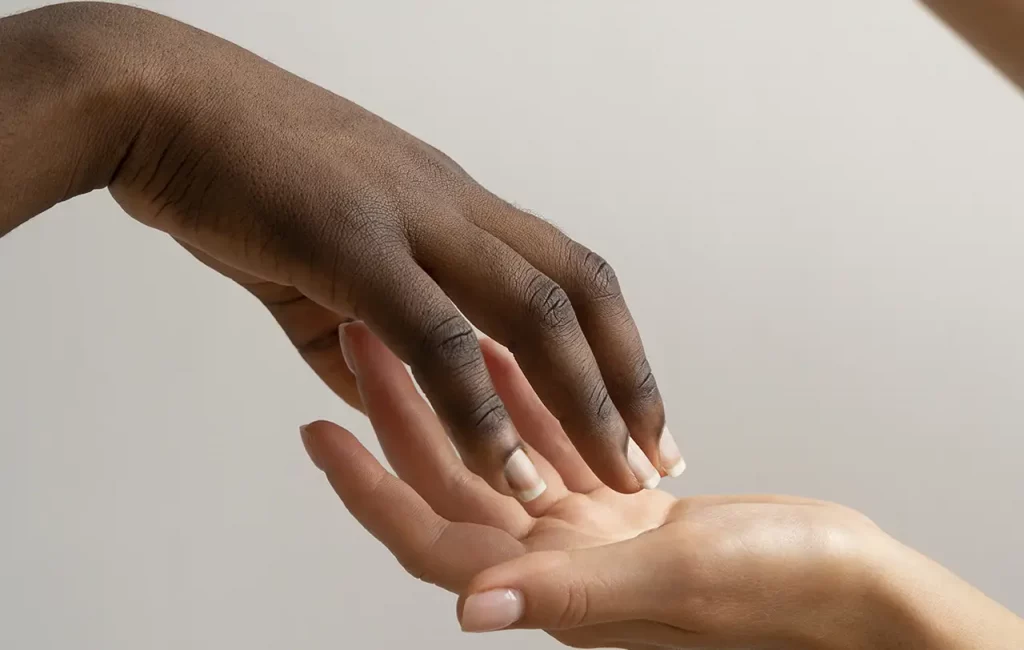
The Nail: A High-Fashion Accessory
The nail is more than just a keratin plate; it is an extension of one’s gestures. For Black women, the choice of colors and shapes is a major field of artistic expression.
Health Before Aesthetics
Prolonged use of gel or acrylics can weaken the natural nail. For Black women, whose nails can sometimes be prone to natural brown pigmentation (melanonychia striata), it is crucial to monitor any changes.
- Pro Tip: Daily massage of the cuticles with castor oil stimulates growth and strengthens the nail plate.
Choosing Colors: Breaking the Myths
For a long time, restrictive fashion “rules” suggested that only certain colors suited dark skin. This is false.
- Nudes: They must be chosen with precision. A “rosy beige” nude from a supermarket often looks chalky on dark skin. Look for chocolate, caramel, or burnt sienna tones.
- Neons: Fuchsia pink, electric orange, and lemon yellow create a magnificent, solar contrast against melanin.
- Reds: A deep burgundy or a classic “oxblood” red remains the pinnacle of timeless elegance.
Your hands are the map of your journey and the tools of your ambition.
Anonyme
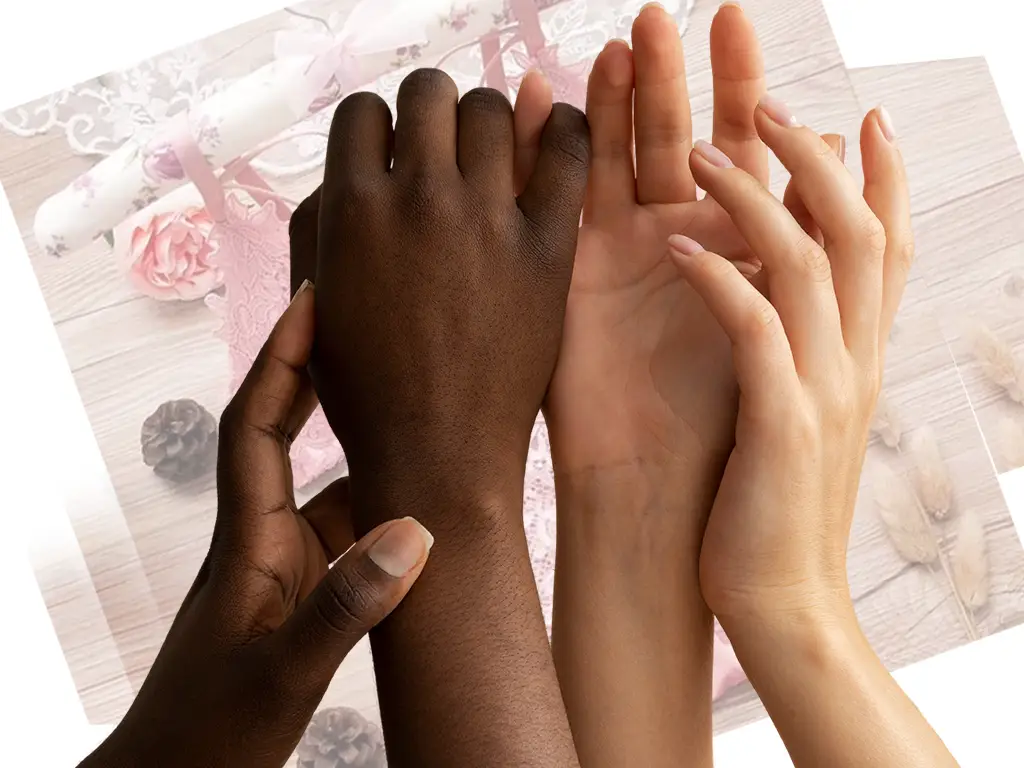
Hands and Careers: When Function Dictates Aesthetics
This is where hand care becomes both strategic and political. The appearance of our hands communicates our professionalism before we even speak.
1. Healthcare and Caregiving (Nurses, Doctors, Estheticians)
In these fields, hands are the primary tool of the trade. Compulsive washing and latex gloves aggressively dehydrate the skin.
- The Look: Short nails, often natural or with a transparent semi-permanent polish for hygiene reasons.
- The Challenge: Preventing cracks and fissures. Using barrier creams based on silicone or beeswax is essential to protect the skin from repeated water contact.
2. Corporate and Finance (The “Power Look”)
In corporate environments, the hand accompanies the speech. It signs contracts; it points to charts.
- The Look: “Almond” or “Squoval” (square-oval) shapes dominate. Sobriety is key: a modern French manicure or neutral tones that signal rigor and attention to detail without being a distraction.
- The Message: “I master the details; I am impeccable.”
3. Creative and Digital Fields (Influencers, Designers, Artists)
Here, the hand is media. With the rise of social media, close-ups of keyboards or products are constant.
- The Look: This is the realm of “Stiletto” or XXL “Coffin” nails. Nail Art becomes a visual signature: nail jewelry, matte textures, and ethnic or futuristic patterns.
- The Message: “I am the avant-garde.”
4. Manual Trades and Craftsmanship (Chefs, Potters, Farmers)
Hands are marked by effort, but this does not exclude beauty.
- The Look: Very short, scrubbed nails. The focus is on skin suppleness rather than polish.
- Specific Care: Using lemon juice to clean under the nails and eliminate odors or stains from pigments and food.
For a Black woman, taking care of her hands is a way of honoring a tool that works hard, creates, caresses, and transmits. Whether your hands are those of a surgeon with bare nails or a creative director with crystal-encrusted claws, they deserve the same level of excellence in hydration and protection.
Your hands tell your story. Make sure they tell a story of care, respect, and pride.

Related Posts


Stay Informed With the Latest & Most Important News
Previous Post
Next Post







Advertisement
